The Architect of
Energy Transition
From a chemical engineering graduate to the helm of the world's 12th-largest oil company and the presidency of the most consequential climate summit in history.
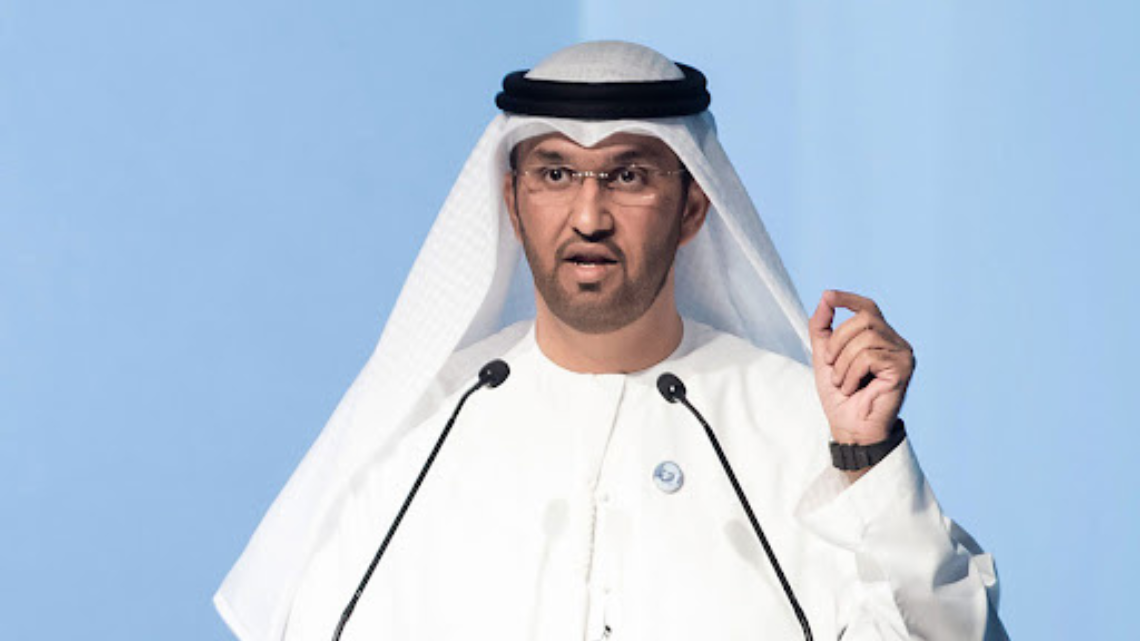
His Excellency
Dr. Sultan Ahmed Al Jaber
Born in the United Arab Emirates, Dr. Sultan Ahmed Al Jaber has emerged as one of the most influential figures in global energy policy. His unique position at the crossroads of fossil fuel production and renewable energy deployment makes him a singular figure in the 21st-century energy landscape.
Holding the dual mandate of expanding the UAE's hydrocarbon wealth while simultaneously driving its clean energy ambitions, Dr. Al Jaber represents the pragmatic approach to energy transition — one that acknowledges the world's continuing dependence on fossil fuels while investing aggressively in the technologies of tomorrow.
Education & Credentials
University of Southern California
Los Angeles, California, USA
Dr. Al Jaber earned his PhD in Business & Economics from the prestigious University of Southern California. His doctoral research focused on the intersection of energy economics and industrial policy — a foundation that would later inform his approach to national transformation.
USC's Marshall School of Business is ranked among the top global programs for energy economics and strategic management.
Coventry University
Coventry, England, UK
His undergraduate studies in Chemical Engineering at Coventry University provided the technical foundation essential for understanding the complexities of oil refining, petrochemical processes, and energy systems that would define his career trajectory.
Chemical engineering remains the backbone of understanding both fossil fuel processing and emerging renewable technologies.
Leadership Approach
Dr. Al Jaber's leadership philosophy is rooted in what he calls "practical pragmatism" — the belief that idealism must be tempered by the realities of energy markets, geopolitics, and human development needs. He advocates for an inclusive transition that doesn't leave developing nations behind.
His approach has drawn both admiration and criticism: admirers praise his ability to bring oil-producing nations to the climate table, while critics question whether a fossil fuel executive can genuinely champion decarbonization. This tension is itself the defining narrative of modern climate politics.
We must be realistic about the world we live in, not the world we wish we lived in. Progress requires pragmatism, not just ambition.
A Three-Decade Journey
From engineering graduate to the world stage — tracing the pivotal milestones that defined a career.
A Multi-Dimensional Portfolio
Global Board & Advisory Positions
A multi-dimensional leadership portfolio spanning energy, technology, sustainability, and international governance.
Core Principles & Philosophy
The foundational principles that guide Dr. Al Jaber's approach to leadership, negotiation, and institutional transformation.
Dr. Al Jaber's leadership is defined by pragmatism — the belief that progress requires engaging with the world as it is, not as idealists wish it to be. This philosophy drove the COP28 approach: rather than demanding an immediate fossil fuel phase-out (which would have been rejected by oil-producing nations), he negotiated the first-ever "transition away" language — a smaller step, but one endorsed by every nation on earth. This willingness to accept incremental progress over theoretical perfection has drawn both praise and criticism.
Unlike leaders who operate in silos, Al Jaber deliberately maintains concurrent positions across energy production, clean energy, government, and climate diplomacy. This systems-level approach reflects a conviction that energy transition cannot be solved by any single sector. ADNOC's revenues fund Masdar's growth; Masdar's deployment builds COP28 credibility; COP28 outcomes shape industrial policy. Each role reinforces the others, creating a flywheel of influence.
A central tenet of Al Jaber's vision is that the energy transition must be inclusive. He consistently advocates for developing nations' right to affordable energy, arguing that climate action cannot succeed if it imposes economic hardship on developing economies. This principle underpinned COP28's emphasis on climate finance, the Loss and Damage Fund, and technology transfer mechanisms — ensuring that vulnerable nations have the resources to transition without sacrificing development.
Al Jaber's engineering background manifests in a deep reliance on data and analytics. ADNOC's Panorama Digital Command Center — a $1B+ AI-driven platform — exemplifies this approach, optimizing operations across the entire value chain in real-time. This data-first philosophy extends to policy: his COP28 strategy was grounded in IEA and IPCC datasets, and his industrial policy relies on granular economic modeling of the UAE's manufacturing sectors.
While many corporate leaders optimize for quarterly returns, Al Jaber's investments span decades. Masdar was founded in 2006 — years before clean energy was commercially competitive. ADNOC's $150B transformation plan extends to 2030+. The UAE's "Operation 300bn" industrial strategy targets 2031. This patient capital approach reflects a sovereign wealth perspective: building enduring institutions rather than extracting short-term value.