Renewable
Transformation
Building the world's leading clean energy company — deploying solar, wind, and advanced energy technologies across 40+ countries.
From Vision to Global Impact
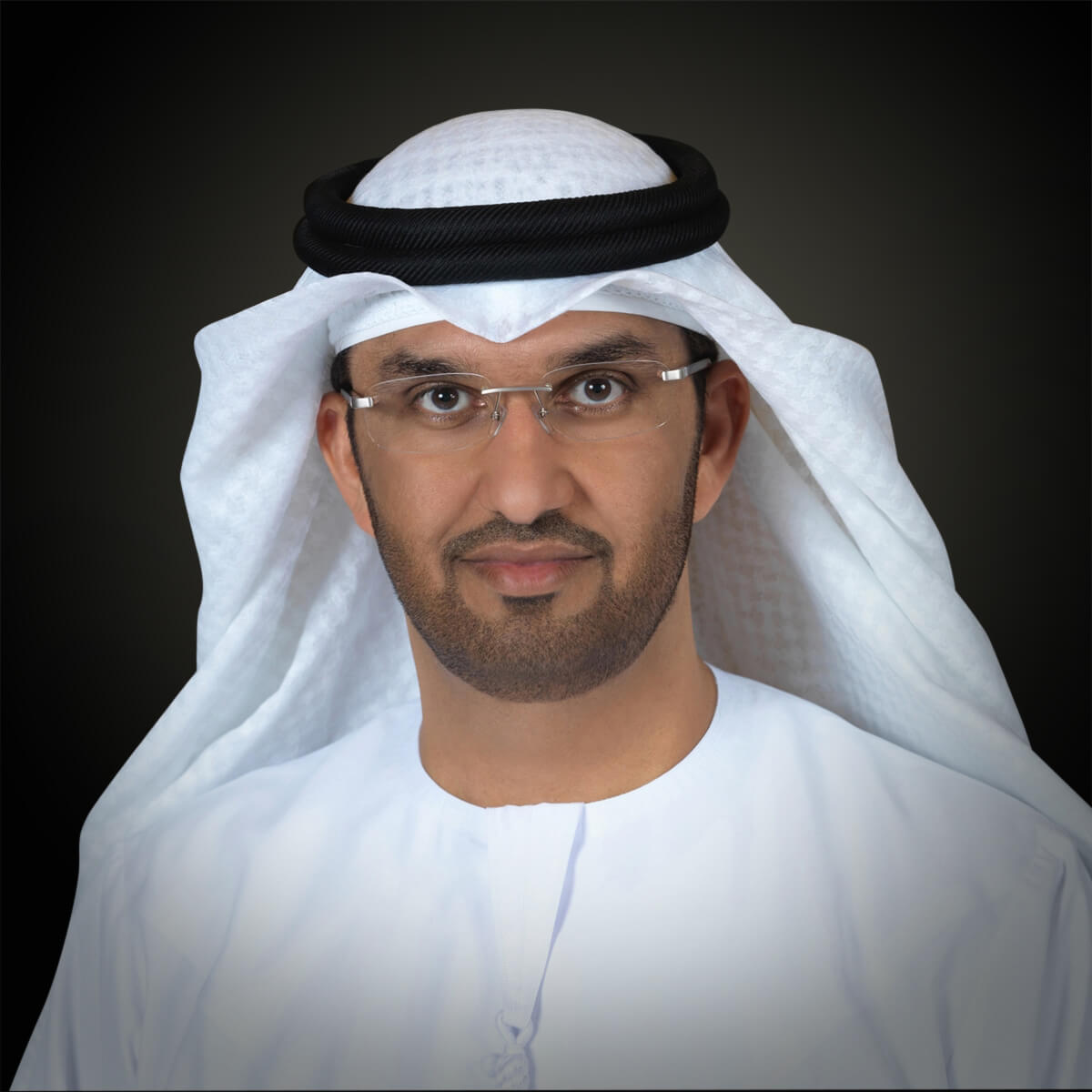
Founded in 2006 under Dr. Al Jaber's leadership, Masdar (officially Abu Dhabi Future Energy Company) was created to position Abu Dhabi as a global leader in renewable energy and sustainable development. What began as a bold bet by an oil-producing nation has grown into one of the world's largest clean energy companies.
Masdar's portfolio now spans solar photovoltaic, concentrated solar power, onshore and offshore wind, energy storage, and green hydrogen projects. The company operates across more than 40 countries on six continents, with a total renewable energy capacity exceeding 20 GW — enough to power approximately 5.6 million homes.
The strategic significance of Masdar extends beyond kilowatt-hours: it demonstrates that oil-producing nations can be leaders in the energy transition, not obstacles to it. This positioning has been central to the UAE's diplomatic credibility on climate issues.
Renewable Energy Ecosystem
Masdar's diversified technology approach ensures resilience and maximizes deployment across varied geographies and resource conditions.
Solar Photovoltaic & CSP
Masdar's solar portfolio includes some of the world's largest and most efficient projects. The Noor Abu Dhabi plant (1.177 GW) was the world's largest single-site solar project at commissioning, while the Al Dhafra Solar PV project (2 GW) uses advanced bifacial technology to achieve record-low tariffs.
Global Solar Footprint
Beyond the UAE, Masdar has deployed solar capacity across the Middle East, Africa, Central Asia, Southeast Asia, and Europe — each project adapted to local conditions, regulatory frameworks, and grid requirements.
Onshore & Offshore Wind
Masdar has significant wind energy holdings, particularly in the UK through its investment in the London Array (630 MW) — one of the world's largest offshore wind farms. Additional wind projects span the Seychelles, Jordan, Oman, and Uzbekistan. The offshore wind portfolio positions Masdar as a credible player in what many analysts consider the most scalable renewable technology for northern hemisphere markets.
Battery & Thermal Storage
Energy storage is increasingly central to Masdar's strategy, enabling solar and wind to serve as baseload power sources. The integration of battery energy storage systems (BESS) with large-scale solar projects is creating a new paradigm for dispatchable renewable energy — eliminating the intermittency challenge that has historically limited renewables' share of the generation mix.
Masdar's storage partnerships include collaborations with leading battery technology providers and research institutions, focusing on lithium-ion, solid-state, and emerging long-duration storage technologies.
Green Hydrogen Ambitions
Masdar is positioned at the forefront of the UAE's green hydrogen strategy. Leveraging the country's exceptional solar resources to produce hydrogen via electrolysis, the company is developing projects that could serve both domestic industrial demand and international export markets — particularly in Europe and East Asia.
The strategic logic is compelling: Abu Dhabi's existing energy infrastructure, port facilities, and geographic position make it a natural hydrogen export hub, potentially replacing fossil fuel exports with clean hydrogen as global demand scales.
Solar + Battery Baseload Project
In a landmark development for the global energy sector, Masdar's 2025 solar-plus-battery project demonstrated that renewable energy can provide firm, baseload power — a capability historically reserved for fossil fuels and nuclear plants.
The project combines large-scale solar photovoltaic generation with grid-scale battery energy storage systems (BESS), enabling 24/7 power delivery regardless of solar irradiance conditions. This is achieved through oversizing the solar array relative to grid connection capacity, storing excess daytime generation, and dispatching it during evening and nighttime hours.
The economic implications are significant: when solar-plus-storage can provide the same reliability as gas-fired generation at competitive prices, the fundamental argument against renewable energy's ability to serve baseload demand is effectively neutralized. This project provides a replicable model for energy systems worldwide.
Energy Diversification Framework
How Masdar fits into the UAE's broader energy diversification strategy — transitioning from oil dependence to a balanced energy portfolio.
Global Impact Dashboard
Masdar has grown from a regional pioneer into one of the world's most active and influential renewable energy companies, with footprints on six continents.
The Clean Tech Innovation Pipeline
Beyond conventional solar and wind, Masdar acts as an incubation and deployment engine for next-generation clean energy solutions.
Green Hydrogen Hubs
Developing gigawatt-scale green hydrogen projects using solar power to electrolyze water. Key developments in the UAE, Egypt, and Morocco aim to make Masdar a premier global supplier of zero-carbon fuel for heavy industry and aviation.
Advanced Energy Storage
Pioneering hybrid systems combining dispatchable renewables with utility-scale battery storage (BESS) and thermal storage solutions, overcoming the intermittency challenge to provide stable baseload clean power to national grids.
Sustainable Aviation Fuel (SAF)
Spearheading research and commercialization of synthetic fuels derived from green hydrogen and captured CO2. Masdar aims to produce commercially viable drop-in replacements for traditional jet fuel to decarbonize global aviation.