Climate
Diplomacy
The most consequential climate summit in history — 198 nations, 14 days of negotiations, and the first-ever agreement to "transition away from fossil fuels."
Leading the World to Consensus
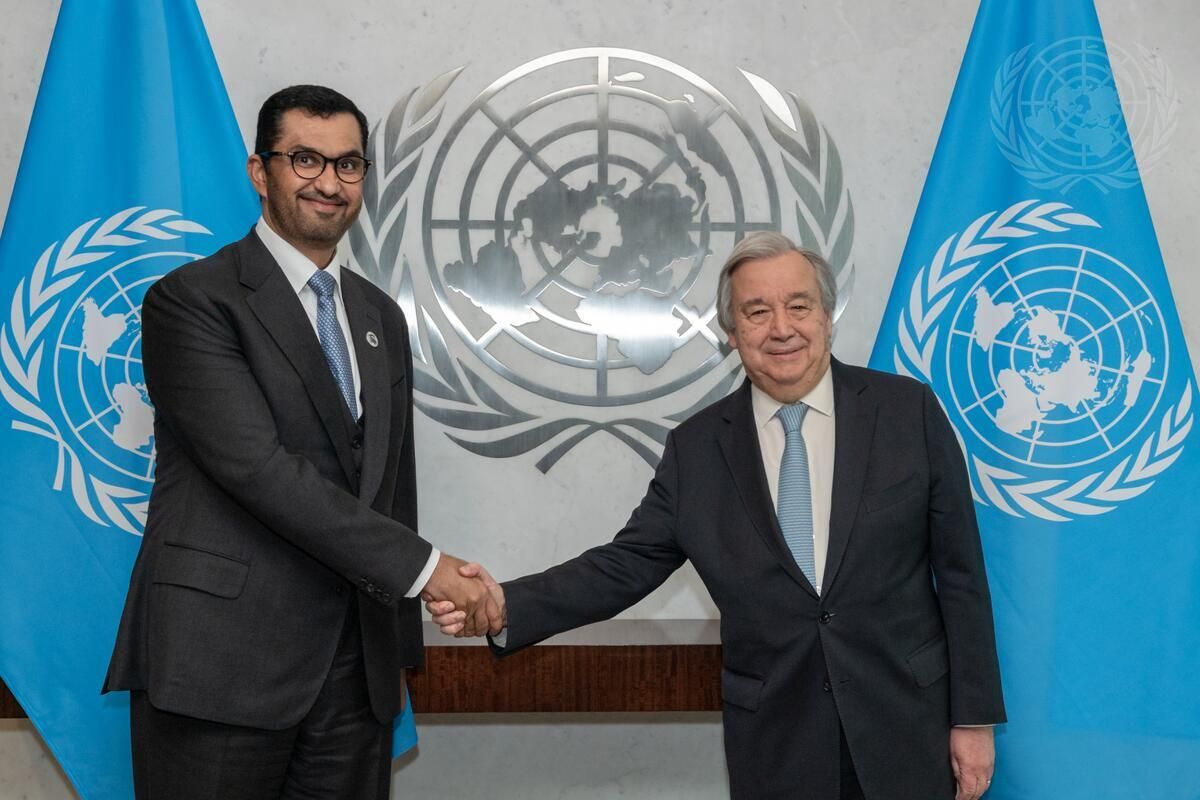
The 28th Conference of the Parties to the UN Framework Convention on Climate Change (COP28) was held in Dubai from November 30 to December 13, 2023. Dr. Sultan Al Jaber's appointment as President-Designate was itself historic and controversial — the first time a CEO of a major oil company would preside over a UN climate summit.
The conference concluded with the "UAE Consensus" — a landmark agreement that, for the first time in 28 years of UN climate negotiations, explicitly addressed the role of fossil fuels. The agreement called for "transitioning away from fossil fuels in energy systems, in a just, orderly and equitable manner" and set targets for tripling renewable energy capacity and doubling energy efficiency by 2030.
The diplomatic achievement was significant not merely for its content but for the process by which it was achieved: Al Jaber's team navigated the interests of oil-producing states, small island nations facing existential climate threats, and major economies with divergent energy transition timelines to reach an agreement adopted by consensus.
The UAE Consensus — Policy Outcomes
Transition Away from Fossil Fuels
The first-ever COP decision text to explicitly address fossil fuels — calling for a "just, orderly, and equitable" transition in energy systems. A watershed moment in 28 years of climate negotiations.
Triple Renewable Energy by 2030
Nations committed to tripling global renewable energy capacity to at least 11,000 GW by 2030, requiring unprecedented deployment of solar, wind, and other clean technologies.
Loss & Damage Fund
Operationalized the loss and damage fund on day one of COP28, with initial pledges exceeding $700 million — addressing a decades-long demand from vulnerable nations.
Double Energy Efficiency
Agreed to double the global annual rate of energy efficiency improvement from ~2% to ~4% by 2030, recognizing efficiency as the cheapest and fastest form of clean energy.
Global Stocktake
Completed the first Global Stocktake under the Paris Agreement, providing a comprehensive assessment of collective progress and gaps — forming the basis for the next round of NDCs.
Methane & Health Pledges
Secured the first-ever health day at a COP and the Global Methane Pledge acceleration, with 50+ oil and gas companies committing to near-zero methane emissions by 2030.
Criticism vs. Achievements
An honest evaluation of COP28 requires acknowledging both the legitimate criticisms and the genuine achievements.
What Critics Argued
- — "Transition away" is weaker than "phase out" — the language reflects fossil fuel industry influence
- — An oil company CEO leading climate talks represents a fundamental conflict of interest
- — Record number of fossil fuel lobbyists (2,400+) attended the conference
- — Carbon capture inclusion provides a loophole for continued fossil fuel use
What Was Accomplished
- + First-ever mention of fossil fuels in a COP decision text in 28 years
- + Consensus agreement by all 198 parties — including major oil producers
- + Loss and damage fund operationalized on day one with $700M+ in pledges
- + Concrete renewable energy and efficiency targets for 2030
The Architecture of Climate Consensus
COP28 Climate Finance Dashboard
The financial commitments and mechanisms operationalized at COP28 — representing the largest climate finance mobilization in conference history.
ALTÉRRA — $30 Billion Climate Investment Platform
Launched at COP28 by the UAE, ALTÉRRA is the world's largest private climate investment vehicle. Designed to catalyze $250 billion in climate finance by 2030, the fund operates through two pillars: ALTÉRRA Acceleration ($25B for commercial-rate returns) and ALTÉRRA Transformation ($5B for concessional capital in emerging markets).
ALTÉRRA addresses the critical gap between climate ambition and finance reality. By targeting institutional capital at commercial rates, it avoids the political fragility of government aid — creating a sustainable, market-driven mechanism for global climate investment.
Post-COP28: From Pledges to Action
Tracking the delivery of COP28 commitments — where progress is being made and where gaps remain.
We have the basis to make transformational change happen. This is a plan that is led by the science. We have language on fossil fuel in our final agreement for the first time ever.