The Future of
Energy & Industry
AI-powered grids, hydrogen economies, carbon capture at scale, and the industrial transformation redefining the UAE's economic model for the post-oil era.
Transforming the UAE's Industrial Base
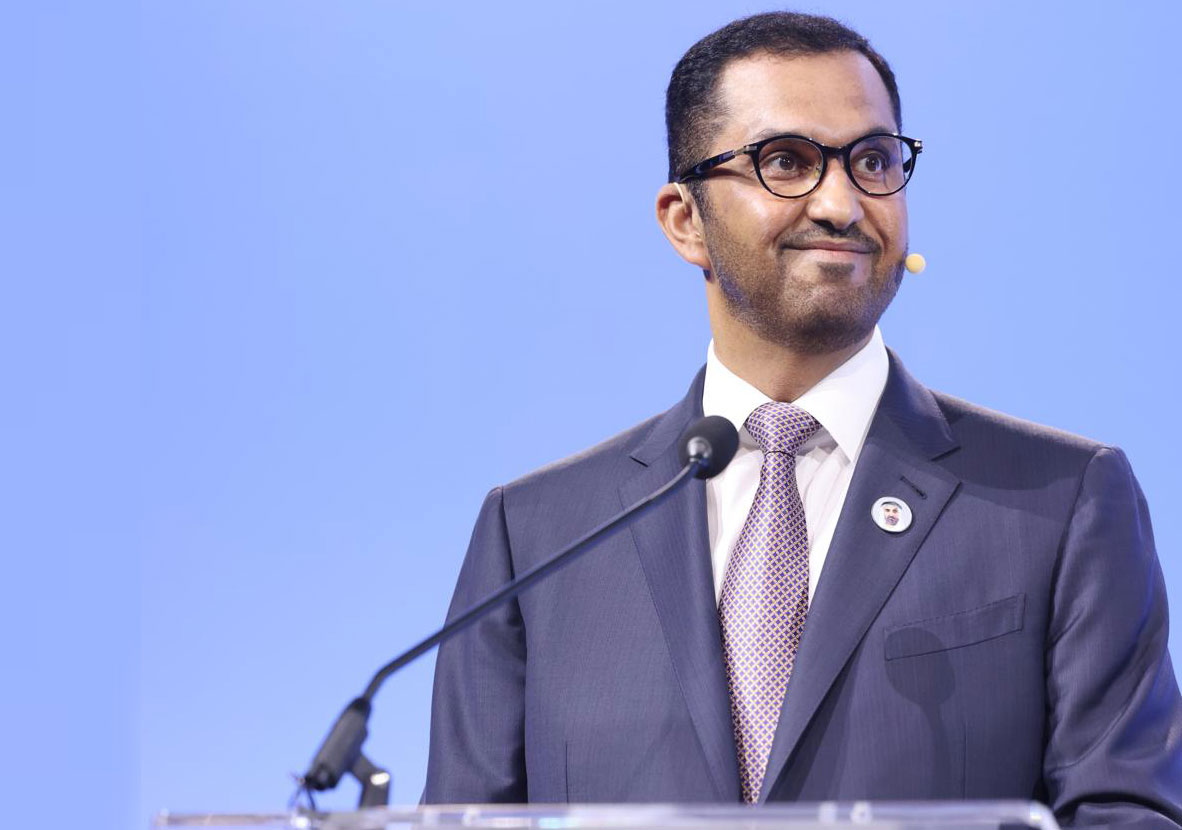
As Minister of Industry and Advanced Technology, Dr. Al Jaber oversees the UAE's "Operation 300bn" strategy — an ambitious plan to increase the manufacturing sector's contribution to GDP from AED 133 billion to AED 300 billion by 2031. This industrial transformation is essential to the UAE's post-oil economic diversification.
The strategy focuses on nine priority sectors including food and beverages, machinery and equipment, pharmaceuticals, medical devices, and advanced materials. The approach combines foreign direct investment attraction, technology transfer agreements, and domestic innovation programs to build a sustainable industrial ecosystem.
Critical to this transformation is the concept of "In-Country Value" (ICV) — ensuring that economic activity generates local employment, knowledge transfer, and supply chain development rather than simply importing finished goods.
Four Pillars of Future Energy
Artificial Intelligence in Energy Systems
The intersection of AI and energy represents perhaps the most transformative opportunity in the sector. ADNOC's Panorama Digital Command Center already uses AI to optimize operations across its entire value chain, reducing costs by an estimated $1 billion annually.
Beyond operational optimization, AI is enabling new capabilities: predictive maintenance reduces downtime; machine learning models optimize drilling parameters in real-time; digital twins simulate entire facilities before construction begins; and natural language processing accelerates technical document analysis.
For renewables, AI plays an equally critical role — optimizing solar panel orientation, predicting wind patterns, managing battery storage dispatch, and balancing grid supply and demand in real-time across millions of distributed energy resources.
The Hydrogen Economy
Hydrogen is increasingly seen as the missing piece in the energy transition puzzle — a clean fuel that can decarbonize sectors where electrification alone is insufficient: heavy industry, long-haul transport, shipping, aviation, and seasonal energy storage.
The UAE's hydrogen strategy spans both "blue" hydrogen (from natural gas with carbon capture) and "green" hydrogen (from renewable-powered electrolysis). ADNOC's existing gas infrastructure and Masdar's solar capacity create a natural synergy for both pathways.
By 2031, the UAE aims to capture 25% of the global low-carbon hydrogen market — an ambitious target that leverages the country's geographical position, existing energy infrastructure, and strong trading relationships with key demand centers in Europe and East Asia.
Carbon Capture, Utilization & Storage
CCUS technology captures CO2 emissions from industrial processes and either stores them permanently underground or utilizes them in products. ADNOC operates the Middle East's first commercial-scale CCUS project, capturing 800,000 tonnes of CO2 annually from its Al Reyadah facility.
The captured CO2 is injected into oil reservoirs for enhanced oil recovery (EOR), demonstrating a model where carbon capture generates economic value while reducing atmospheric emissions. ADNOC has committed to scaling this to 5 million tonnes per year by 2030 — a significant expansion that would make it one of the world's largest CCUS operations.
Critics note that CCUS remains expensive and can extend the lifespan of fossil fuel infrastructure. Proponents argue it's essential for decarbonizing industries like cement and steel where alternatives are limited.
Advanced Nuclear & Small Modular Reactors
The UAE is the first Arab nation to operate nuclear power plants, with the Barakah Nuclear Energy Plant providing up to 25% of the country's electricity. The four-unit plant produces approximately 5.6 GW of clean baseload power, making it the largest single source of clean electricity in the Arab world.
Looking ahead, Small Modular Reactors (SMRs) represent an emerging opportunity — smaller, factory-built nuclear reactors that can be deployed more flexibly and at lower capital cost than traditional large-scale plants. The UAE is evaluating SMR technology for industrial applications, desalination, and hydrogen production.
The combination of nuclear baseload, solar generation, battery storage, and hydrogen production creates a comprehensive clean energy system capable of meeting the UAE's growing energy needs while reducing its carbon footprint.
The Future Energy Mix
How the global energy landscape is projected to evolve across different transition scenarios.
Technology Milestones Ahead
Technology Readiness Matrix
Assessing the maturity and deployment timelines of the critical technologies needed for the net-zero transition.
Mature / Scaling Rapidly
Early Commercial / Pre-Commercial
The Diversification Imperative
How the Ministry of Industry & Advanced Technology is structurally decoupling the UAE's economic growth from oil price volatility.
Advanced Manufacturing
Shifting from exporting raw materials to manufacturing high-value finished products locally. The "Make it in the Emirates" initiative has driven $23 billion in local procurement agreements since its launch.
Semiconductors & AI
Strategic investments in semiconductor manufacturing (via GlobalFoundries) and sovereign AI cloud infrastructure (G42) to position the UAE as a critical node in global tech supply chains.
Agri-tech & Food Security
Developing autonomous vertical farms, drought-resistant crop engineering, and localized pharmaceutical production to ensure supply chain resilience against global shocks.